
绿色照明·节能社会
LED, short for Light Emitting Diode, is a solid-state semiconductor device that can convert electrical energy into visible light. After 2010, benefiting from policy support and technological progress, the overall LED industry chain has developed rapidly, and the LED application industry has also shown a high-speed growth trend. Currently, the proportion of output value in the LED industry chain has exceeded 80%.
As one of the most important application areas of LED, the service life and related performance of products have been continuously improving in recent years, while the overall unit price of products has steadily decreased, driving the continuous increase in the penetration rate of LED products.

2、 Industrial chain
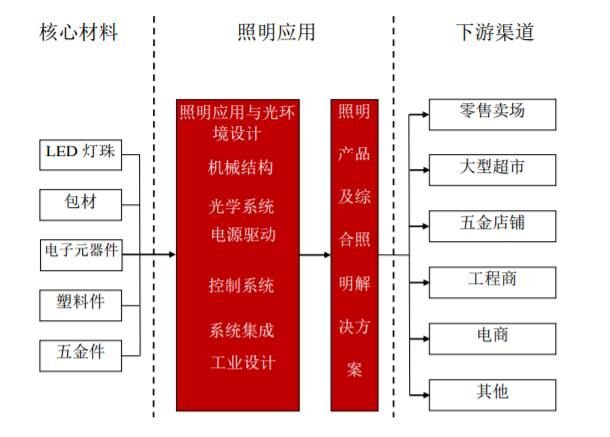
Upstream: Various raw materials, mainly including LED beads, electronic components, structural components, and packaging materials. Among them, the main electronic components, structural parts, packaging materials, etc. belong to mature industries with relatively full competition, stable production technology, and sufficient supply. Therefore, the raw material procurement needs of this industry can be fully guaranteed; LED beads are the core components of LED lighting products. With the continuous improvement of technology and production capacity, they contribute to the large-scale promotion and application of LED lighting products.Downstream: It has a wide range of application scenarios, covering home, commercial, industrial, office, education, etc. Its end consumers are mainly enterprises, institutions, and individual consumers. The export of LED lighting products mainly adopts the ODM/OEM model, with downstream customers mainly consisting of large home product retail stores, supermarkets and other channel customers, as well as brand customers in the lighting and home appliance fields, including engineering companies. The main channels for domestic sales include shopping malls, supermarkets, distributors, hardware, e-commerce, etc.
3、 Overview of Industry Development
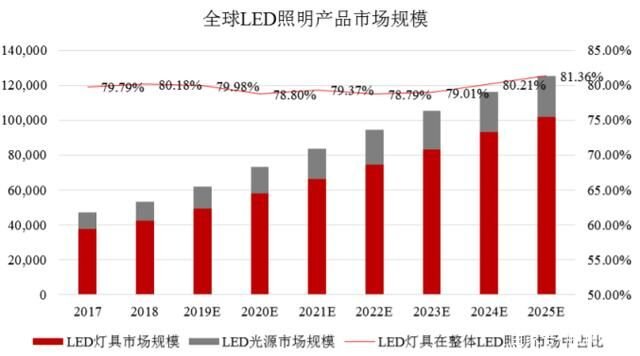
LED lighting products can usually be divided into LED lamps and LED light sources. Due to the fact that integrated design LED lighting fixtures are usually easier to integrate with the surrounding environment and have more aesthetic effects, as the unit price of products continues to decrease, the acceptance of LED lighting fixtures continues to increase, gradually becoming the main category of LED lighting products, currently occupying about 80% of the market size. The specific situation is as follows:
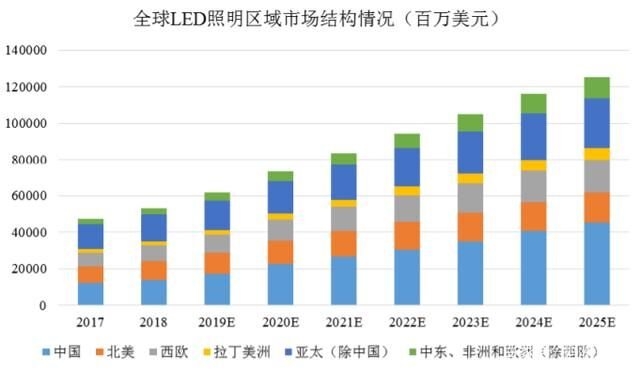
From a regional distribution perspective, Western Europe, North America, and the Asia Pacific region are the main markets for global LED lighting products. According to IHS data, the LED lighting market size in the above-mentioned regions was approximately 47.532 billion US dollars in 2018, accounting for 89.57% of the overall global market.
At present, China is the world's largest LED lighting market (single country), accounting for 26.48% of the global market size in 2018. Except for China, the Asia Pacific region, North America, and Western Europe respectively accounted for 28.03%, 19.08%, and 15.99% of the market size.
IHS predicts that by 2025, Western Europe, North America, and the Asia Pacific region will remain the main markets for global LED lighting, with China's market share further increasing to 36.21%.
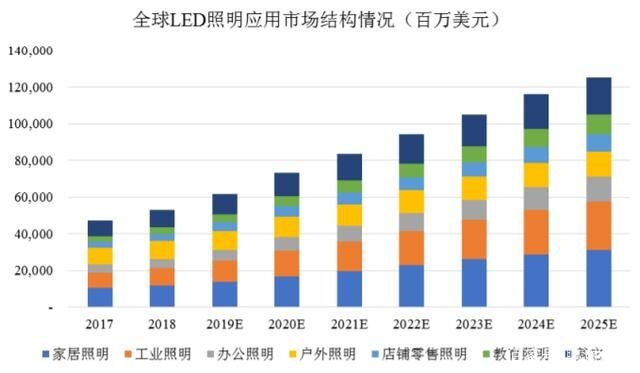
From the perspective of application scenarios, home lighting, industrial lighting, outdoor lighting, office lighting, store retail lighting, educational lighting, etc. are the main application scenarios of LED lighting.
According to IHS data, in 2018, the market size of home lighting was $11.71 billion, accounting for 22.07%. Outdoor lighting and industrial lighting were the second and third largest application areas, accounting for 18.23% and 17.85% respectively. In addition, office lighting, store retail lighting, and educational lighting accounted for 6.50% -10% of the market size.
IHS predicts that home lighting will remain the largest application scenario for LED lighting in the future, with a market size of $31.245 billion by 2025, accounting for nearly 25%. Industrial lighting, office lighting, store retail lighting, and educational lighting will all have a certain proportion increase. Among them, educational lighting is the fastest-growing sub application category, and the market size is expected to increase from $3.46 billion in 2018 to $10.816 billion in 2025, with a compound annual growth rate of 17.68% during this period.
4、 Industry business model
The main business processes of the LED lighting industry include research and development, production, sales, etc. Currently, the industry's business models mainly include OEM, ODM, OBM, etc.
1 OEM mode
OEM mode (Original Equipment Manufacturer mode) refers to LED lighting manufacturers producing products completely according to customers' design and functional quality requirements, and customers selling their products using their own brand and sales channels.
2 ODM mode
ODM mode (Original Design Manufacturer) refers to LED lighting manufacturers mainly completing product development and producing products based on customer orders. Customers use their own brand and sales channels to sell their products.
In the ODM mode, some customers will provide specific product specifications and performance requirements to the manufacturer, and the LED lighting production enterprise will complete the specific product development and production process; Some LED lighting manufacturers also utilize their market research capabilities to closely follow market trends, propose innovative product designs, and form relatively complete product solutions to promote to customers.
This type of model requires LED lighting manufacturers to have strong market foresight and influence, and the implementers are generally led by LED lighting leading enterprises.
3 OBM mode
The OBM model (Original Brand Manufacturer) refers to LED lighting manufacturers independently designing and developing products, and selling them under their own brand. The OBM mode requires LED lighting manufacturers to have not only research and development design capabilities and manufacturing capabilities, but also strong brand appeal and channel networks.
5、 Industry competition pattern
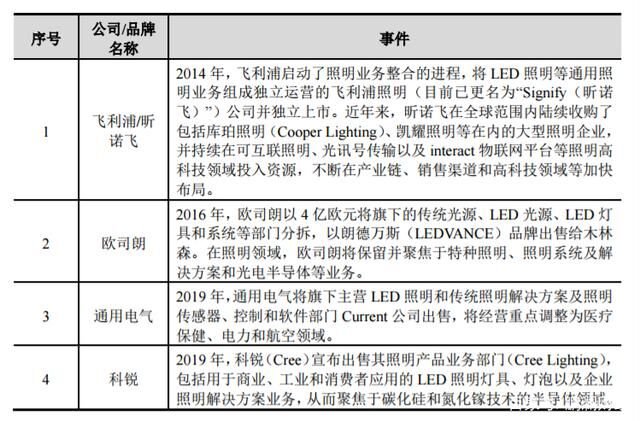
After years of development, the global LED lighting industry has a relatively complete industrial system, forming an industrial pattern centered on three major regions: East Asia, North America, and Europe. Among them, LED lighting industry enterprises in developed countries such as North America and Europe focus on channel construction, brand operation, and some basic research, while retaining the production and manufacturing of some high-end or differentiated products. Traditional lighting brands represented by Signify (formerly Philips Lighting), Osram, General Electric, etc. mainly come from European and American countries. These brands have been deeply involved in lighting for many years and still have certain design capabilities and brand effects in the LED lighting industry.
In recent years, against the backdrop of the rapid rise of China's lighting industry, the rapid development and application of LED lighting, and the increasingly fierce competition in the international lighting market, some European and American lighting giants have carried out a series of self lighting business integrations, adjusted and sought to occupy a certain market position in the new stage of lighting industry development. The business integration events of some European and American lighting giants are as follows:
On the other hand, relying on a relatively complete industrial chain, East Asia, represented by China, has become the manufacturing center of the global LED lighting industry, accounting for up to 70% of the global output value. In China, LED lighting enterprises are mainly distributed in the southeastern coastal areas of Jiangsu, Zhejiang, Fujian, and Guangdong, forming three major industrial clusters in the Yangtze River Delta, Pearl River Delta, and Fujian Jiangxi regions. Among them, representative enterprises in the Yangtze River Delta region include Sunshine Lighting, Debon Lighting, OPPO Lighting, Kaiyao Lighting, etc. Representative enterprises in the Pearl River Delta region include Foshan Lighting, Sanxiong Aurora, etc. Representative enterprises in the Fujian Jiangxi region include Tongshida, etc.
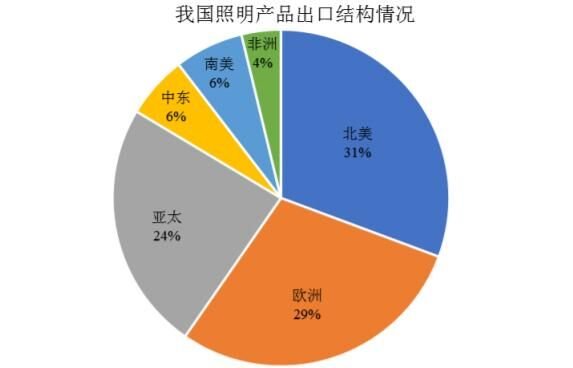
According to Csil data, the export scale of China's lighting products in 2018 was 39.021 billion US dollars, with North America, Europe, and the Asia Pacific region being the main export areas for China's lighting products. The export scale to these regions was 32.62 billion US dollars, accounting for 83.60% of the overall export scale. The United States, Germany, the United Kingdom, the Netherlands, Japan, and other countries were the main export destinations for China's lighting products.
At present, the main competitors in the LED lighting industry include the following types:
One is internationally renowned lighting brands represented by Xinnuofei, Osram, etc. These companies rely on their advantages in technology and brand marketing, and through global layout, mainly adopt ODM/OEM mode to purchase from Chinese manufacturing enterprises, ultimately achieving global sales;The second is domestic lighting enterprises represented by OPPO Lighting, Mulinsen, etc. These enterprises have established a certain systematic brand and channel capability through self construction or acquisition, and achieve sales through independent brands or acquired brands;Thirdly, domestic lighting enterprises represented by Sunlight Lighting have gained high recognition from major global lighting industry brands and distributors due to their strong technological research and development capabilities, strict production quality management levels, and cost control advantages. Currently, they mainly provide ODM services and are actively exploring brand and channel layouts.In addition, there are some lighting companies in China with lower technological levels or smaller scales that mainly provide manufacturing services to domestic and foreign customers through OEM models, with customers mainly concentrated in developing markets such as Africa, South America, and the Middle East.6、 Industry Development Trends
On the one hand, compared to traditional lighting products, LED lighting products have higher electro-optical conversion efficiency and a significantly longer service life than traditional lighting products such as incandescent lamps and energy-saving lamps, making them more energy-efficient and environmentally friendly; On the other hand, LED lighting products have a wide range of application scenarios, among which integrated design LED lamps are usually easier to integrate with the surrounding environment and better meet the increasingly diversified, fashionable, and personalized needs of consumers. These factors together drive the rapid growth of the LED lighting industry.
In the future, with the continuous development of the social economy, LED lighting will still dominate the new global lighting market and continue to replace traditional lighting in the existing market. In the future period, The LED lighting industry will further develop around core concepts such as convenience, health, and recycling, constantly evolving towards three major development directions: intelligent lighting (lighting control and connection), human factors lighting, and circular economy
1 Intelligent lighting will become an important development direction for future lighting
In recent years, IoT related technologies such as big data, cloud computing, and artificial intelligence have flourished. Based on the semiconductor properties of LED lighting, it can serve as a carrier and interface in the data-driven connection process, providing more possibilities for product intelligence. By combining with intelligent control, the characteristics and advantages of LED lighting can be highlighted to the maximum extent, meeting users' lighting needs in various aspects such as dimming, color matching, remote control, interaction, scalability, etc., achieving the integration of lighting technology with advanced technologies such as the Internet of Things, cloud computing, and artificial intelligence, and becoming an important component of smart homes and smart buildings. IHS predicts that the global market size of intelligent lighting systems will increase from $12.692 billion in 2016 to $32.72 billion in 2021, and intelligent lighting will become an important development direction for future lighting.
2 Human factors lighting; The concept will drive the continuous upgrading of the lighting industry
Human factors lighting, It refers to the need to pay attention to the visual, physiological, and emotional effects caused by lighting when providing lighting, including immersive experiences, eye comfort, improving work atmosphere and efficiency, and stabilizing emotions. Taking the office as an example, designing office areas and lighting based on specific work and activities significantly improves employees' creativity and work efficiency. People are more likely to concentrate under good visual conditions, and can enhance their sense of happiness and motivation.
In recent years, people have put forward higher requirements for personalized and fashionable design of product additional functions and appearance. The lighting industry needs to conduct relevant design research, human-computer interface design, ergonomics, color and materials design, etc. with user experience as the core starting point, in order to endow products with high added value and excellent product experience. With the increasing awareness of the important role of light in human physical and mental health, the lighting industry will pay more attention to the impact of lighting on human function, health, comfort, and happiness& ldquo; Human factors lighting; The concept will drive the continuous upgrading of the industry.
3 Circular Economy Models Will Help Sustainable Development of LED Lighting Industry
Circular economy refers to an economic and industrial system where resources are recoverable and renewable. Compared to the linear consumption model of the industrial era, circular economy and sustainable development complement each other, emphasizing the harmonious coexistence between the socio-economic system and the natural ecosystem. At present, the circular economy has become a widely recognized resource utilization model worldwide, and the lighting industry will also be affected by this. In order to achieve efficient and circular utilization of resources, the LED lighting industry will continue to improve in design, sustainability, product quality, product recycling, and other aspects. In addition, under the circular economy model, the lighting industry will also shift from traditional product sales to a business model that combines services and products. The European Lighting Association has released the; The Strategic Roadmap 2025; It is believed that with the increasing emphasis on energy efficiency, improving lighting quality through LED products, intelligent lighting systems, and a people-centered circular economy will become a new driving force for the growth of the lighting market. The circular economy model will help promote the sustainable development of the LED lighting industry. Disclaimer: This article is reproduced by Penglan Finance. If there is any infringement, please contact me to delete it!!
Qingdao Seiving's main business includes Qingdao LED solar street lights, LED street lights, LED lighting products, LED smart street lights, high pole lights, medium pole lights, courtyard lights, lawn lights, traffic signal lights, complete services, strong technical strength, advanced technology, integrated solar street lights, strong strength, complete prices, quality first. Welcome to visit the lighting factory and the company's production equipment
HONOR
企业荣誉
New Technology Certificate

High growth enterprises

High tech Enterprise Certificate

Green Lighting Innovation Award
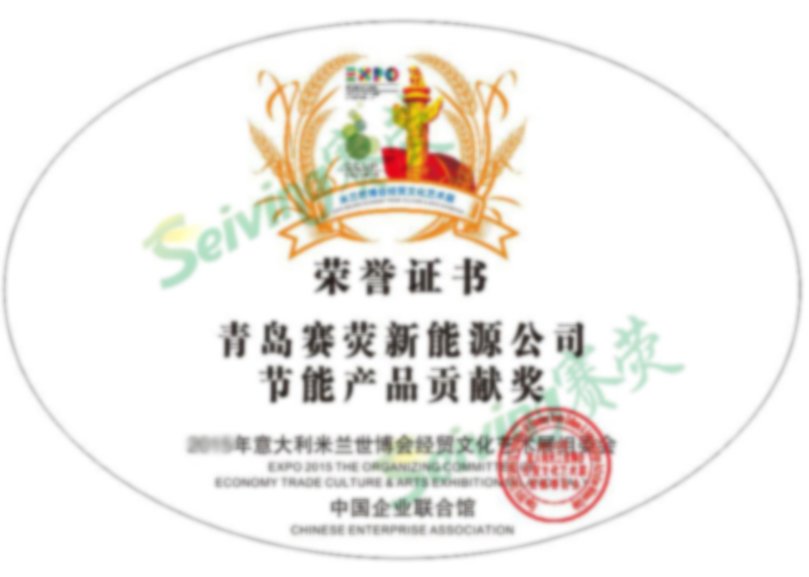
Milan - Energy saving Product Contribution Award

Qianfan Hui Excellence Award
PATENT CERTIFICATES
专利证书
Patent certificate

Patent certificate

Patent certificate
Patent certificate

Patent certificate
Patent certificate
Patent certificate

Patent certificate

Patent certificate

Patent certificate
Patent certificate

Patent certificate
Patent certificate

Patent certificate

Patent certificate
Patent certificate
Patent certificate

Patent certificate

Patent certificate

Patent certificate